
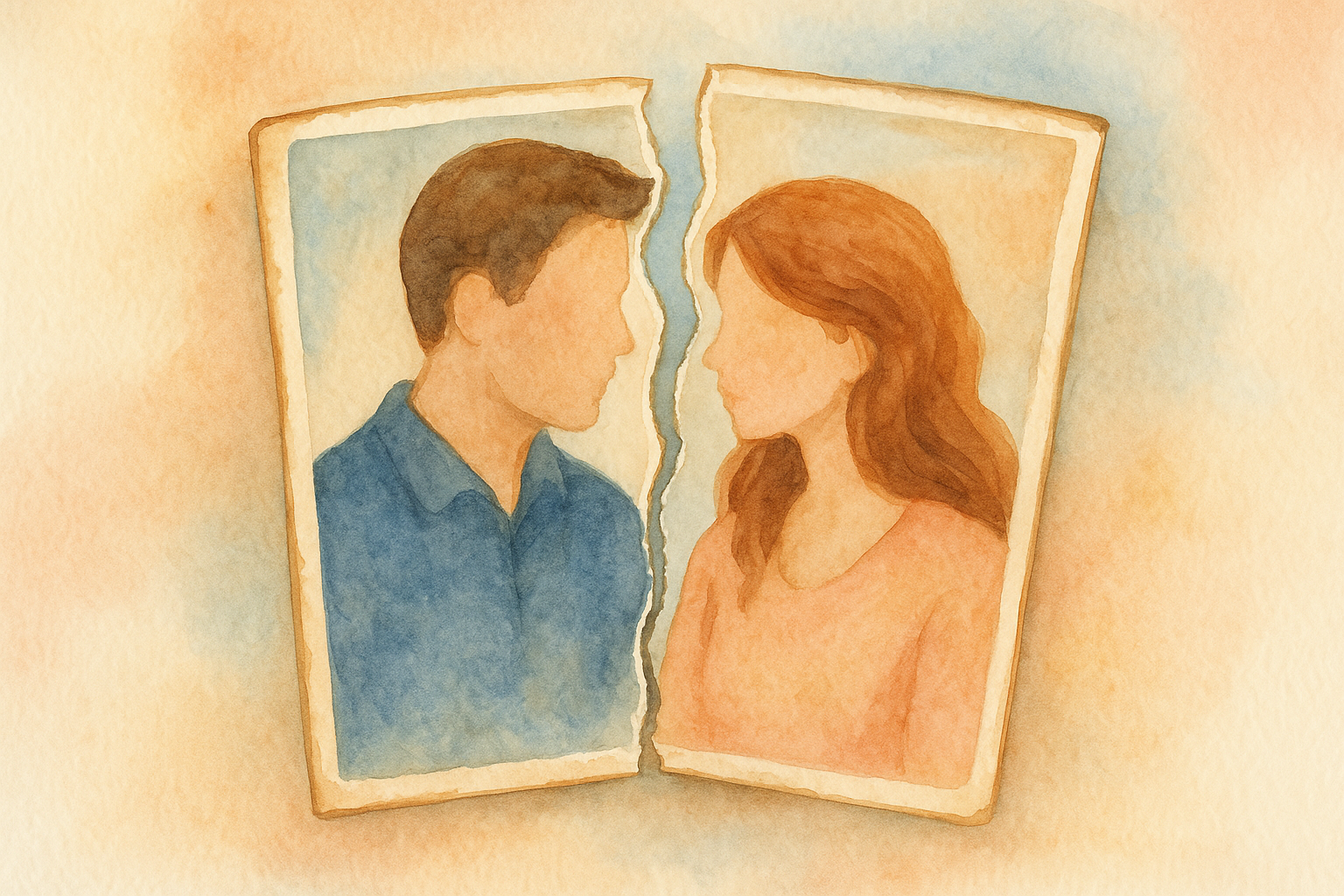
No one plans to become a woman who counts her escapes in attempts. I heard that it takes the average person seven times leaving an abusive relationship before they finally leave for good. That’s the average. I don’t know the accuracy, but it makes sense to me. Leaving is inevitable. But when you finally do, do not beat yourself up for not leaving sooner. You had to stay in order to be true to yourself. You will leave once staying is no longer staying true to yourself.
For me personally, I never physically left. But I left a dozen times in my mind and heart. I am a person who looks for the good in others. I believe in the sanctity of marriage. I am fiercely loyal. I am full of faith—faith in God, in people, in the power of love. I always say, “I am a collector of people.” I either like you or I love you. Once I love you, I keep you in my life.
I had to stay long enough to be true to all those parts of me. They are the best parts of me, really. They are not weaknesses. Those characteristics gave me incredible strength to endure—with hope and even joy.
There eventually came a time when all of my good qualities had been exhausted. After two weeks of silent treatment, he called me into the living room to talk over coffee. For twenty minutes I sipped my coffee while he railed on and on about how unhappy he was and how he couldn’t breathe and didn’t want to live like this anymore.
I watched and listened with complete detachment. Before, I would have felt so sorry for him and wanted to fix his hurt. On that occasion, all I could think of was the country song—“My Give a Damn’s Broken.” Everyone has a breaking point, and I stepped right up to the very edge of mine and peered into the abyss. It was bleak. Something shifted. Suddenly, the terror of leaving turned into the despair of staying.
I had to get to that point to realize that all the love in the world can’t fix someone who doesn’t want to be fixed. But I could love me—and fix me—even though at that point, I was completely broken.
What’s crazy is that at some point I stopped talking to anyone about the things I was going through and just swallowed it, thinking that not rehashing the ridiculous behavior of this person would help me be more content in my relationship. In many ways, it did work—for a while. But the eventual effect is the same as slowly ingesting poison. You won’t notice for a while, but eventually it poisons you from the inside out.
After leaving, I finally started to open up—to close friends and family only—and when I would tell a story about something that had happened, very matter-of-factly, I could see the look of horror on my audience’s faces. I would think to myself, Yeah, I guess that’s pretty bad, isn’t it? I had been so conditioned to the treatment that, over time, it became normalized to me. Believe me, I knew there was something very wrong. I just thought it was something wrong with me.
The process that I embarked on to finally see reality was not a clear path. It was a hazy, jumbled mess of deep-dive rabbit holes, incredibly simple “aha” moments, coupled with countless relapses. I would question the situation, which led me to question him, and then myself—and then promptly slip back into my old pattern of looking at the bright side of everything and everyone. It was exhausting.
When I say I “stepped right up to the very edge of my breaking point and peered into the abyss,” I’m being very serious.
I found myself sitting in a hospital waiting room one night with a bloody sock tied around my wrist. On one side of me was my friend and her husband with worried looks on their faces. On the other side were hospital staff who were trying to be matter-of-fact, as if I were there for a cold. But it was no cold—I was waiting to be admitted on a 51-50. If you don’t know, that’s a police code for suicidal. But that wasn’t even my aha moment. I still thought that maybe I could stay in this marriage and make it work.
After the 72-hour hold, doped up on meds, I went home. My entire family—Mom, Dad, and sister—all flew in from different states to support me. My adult son insisted on picking me up from the behavioral center because he didn’t want me in the car alone with my husband. I didn’t know that until later.
The next few days were a much-needed respite. We watched movies, played games, hung out. I felt very loved. It was the first time since my parents’ divorce that we were all together without the awkward addition of new spouses. I needed that desperately. I felt safe. But eventually, they all had to go home. My dad was the last to leave, after telling my husband he needed to take care of me.
A few hours hadn’t even passed when my then-husband did what his interpretation of my dad’s words were: he tried to take complete control. I was vulnerable, and he went for the jugular. He informed me that he was on his way to the bank to open a new account and transfer all the money from our joint account into it. He had canceled my credit card and was going to take over all the bills because I could not be trusted. I was unstable.
What is happening? I thought as my heart began to pound and my head spun.
“I have to take care of my sh*t,” he exclaimed.
I argued, “I thought it was our sh*t? What happened to taking care of me? How can I be a danger to our finances if everything is on autopay—and since I had taken over the bills years before, everything had always been paid on time?” When he was in charge of paying certain bills, they were always late. We didn’t have water for an entire weekend once because he didn’t pay the water bill, even though he had the money.
Total exhaustion swept over my body, and I thought about giving up—giving in.
“Why are you doing this now?” I pleaded through tears. “Why can’t you just wait a few days and we’ll figure it out together? Just let me rest!”
With those words hanging in the air, he turned on his heels and confidently walked out the door. Luckily for me, I knew how to bank online. I grabbed my phone, opened the bank app, and transferred all the funds into my personal account that he had no access to. The minute I hit the button, I knew I had to get out of that house. Fight or flight—I was doing both.
I hastily grabbed a suitcase and threw things randomly into it, trying to think what I might need, even though I had no idea how long I was going to stay gone. I was hyper-aware of every noise, every second that ticked by. I had to be gone before he went to the bank—only ten minutes away—and discovered all the money was gone, then high-tailed it back home to reckon with me.
I was packed and in the car in a matter of minutes.
That is what I would call my turning point. When I was at my most vulnerable—when I needed him the most—he did that. He showed no mercy. He saw me down at my lowest and took his chance at total domination.
That’s what I mean when I say the pain of leaving turned into the terror of staying. They say when someone shows you who they are, believe them. This time, I finally did.
In truth, it still took nine more months for me to completely leave the house, but that was the turning point. That’s when I knew.
If you are in an abusive or toxic relationship, there is no judgment here. Leaving is not as easy as it may sound.
It’s simple, but it’s not easy.
One day you will leave—it’s inevitable. But please, promise me you will not be angry with yourself for not doing it sooner. You will do it when it’s right. You’ll leave once staying is no longer staying true to yourself.
Leave a Reply