
So many therapy and self-help sources tell you to “work on yourself” or “heal yourself.” But how do you actually do that? What does healing even look like, day to day? That was a vague concept I struggled with for a long time.
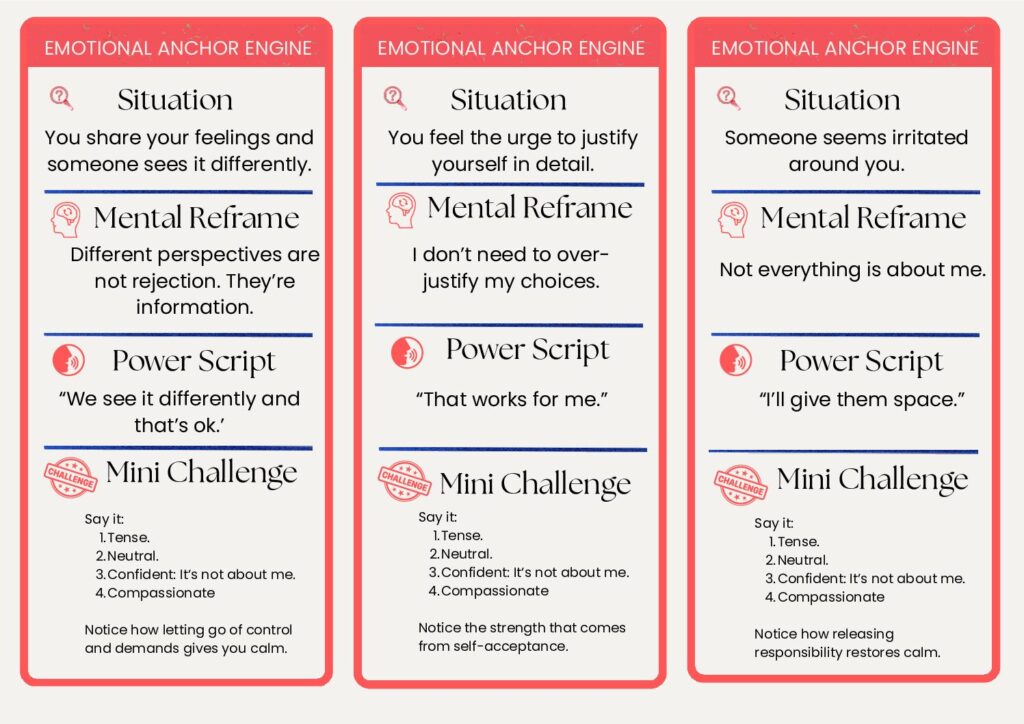
These practices are built around four ways people tend to get stuck — not labels to put on yourself forever, just patterns worth recognizing in the moment. Each one follows the same shape: a Situation you’ll recognize, a Mental Reframe to shift how you’re reading it, a Power Script — something short enough to actually say out loud — and a Mini Challenge where you say that line in four different tones, from tense to calm, until the calm version starts to feel like the one that’s actually true.
Take the “What Do I Even Want” quiz to figure out which one lights you up and where to start. But honestly, practice them all. They’re all useful.
Structural Leader
If you’re the one who naturally takes charge — the planner, the one who steps in to keep things on track — this set is built for the moments that trip up a structural leader specifically: a plan shifting without your input, someone completing a task differently than you would have, being ready while everyone else is still catching up. Each reframe pulls the same thread — “flexibility is strength,” “different doesn’t mean deficient” — and the challenge walks you from gripping the outcome to actually leading it.
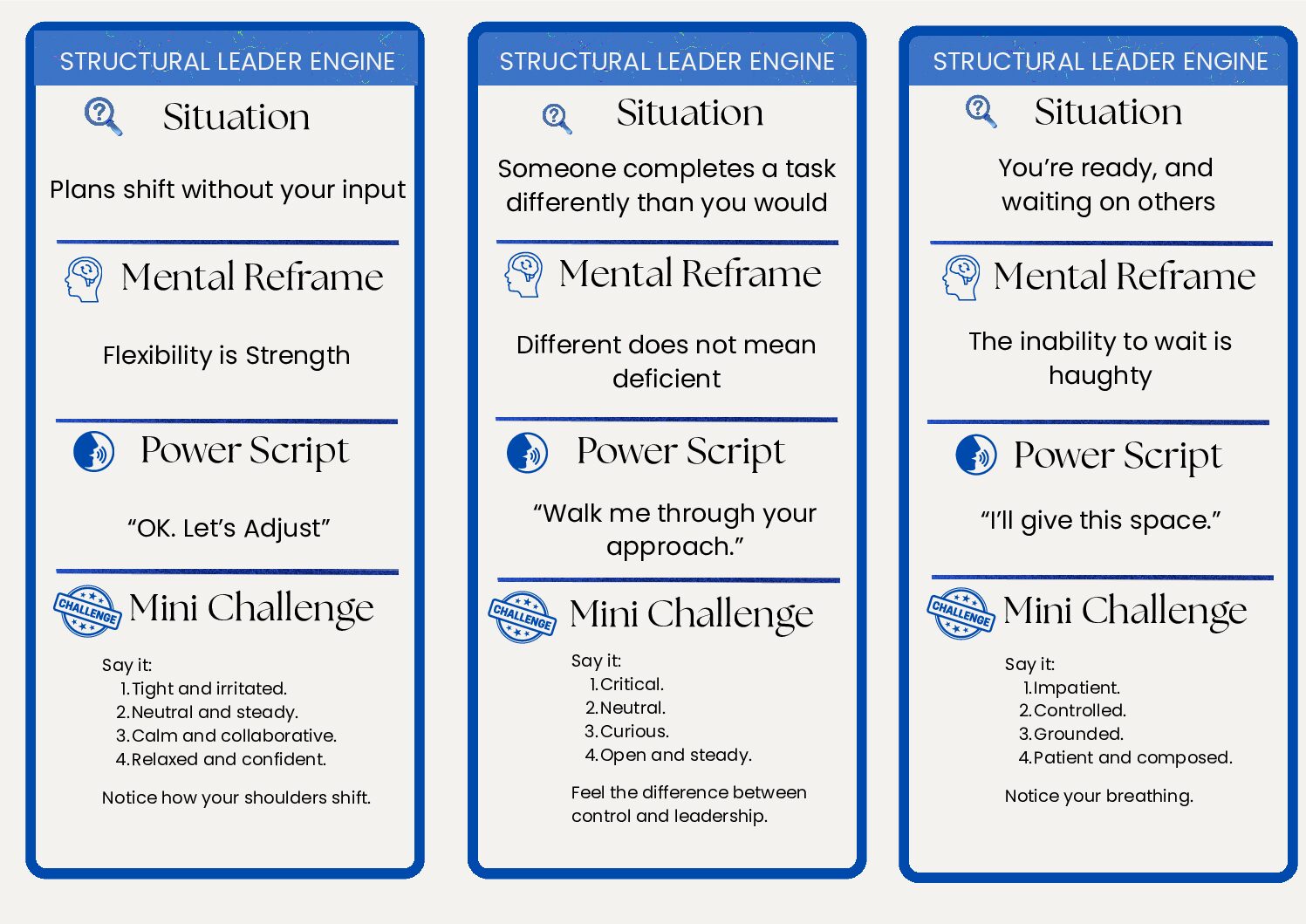
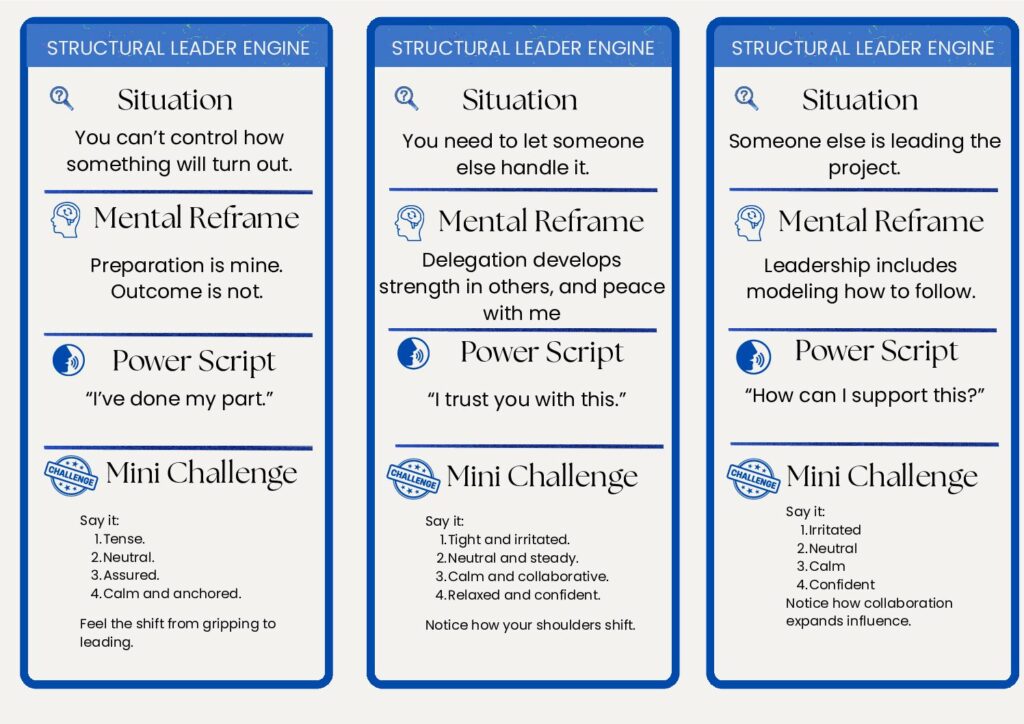
Emotional Anchor
If your gut reaction to a vague text, a short reply, or being left out of something runs straight to your worth, these are built for you. They target the exact moments an Emotional Anchor over-interprets silence or distance — hours pass with no reply, a response feels short, photos surface from something you weren’t invited to — and offer a reframe that separates someone else’s behavior from a verdict on you: “silence is neutral until I assign meaning,” “exclusion is not a verdict on my worth.” The challenge moves you from hurt to compassionate, four tones at a time.
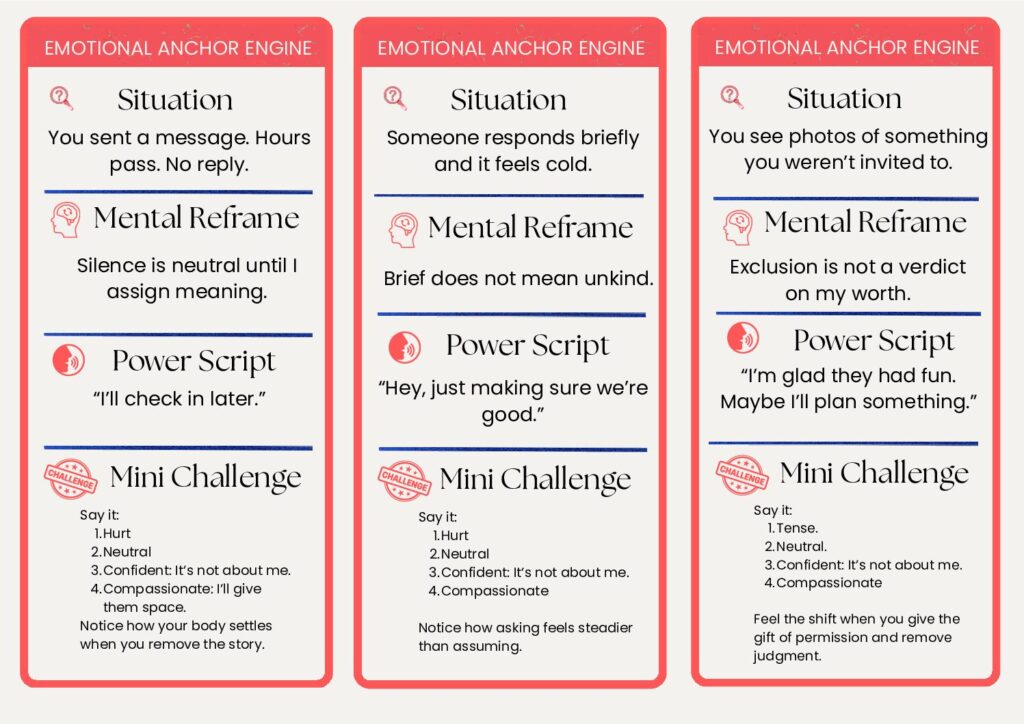
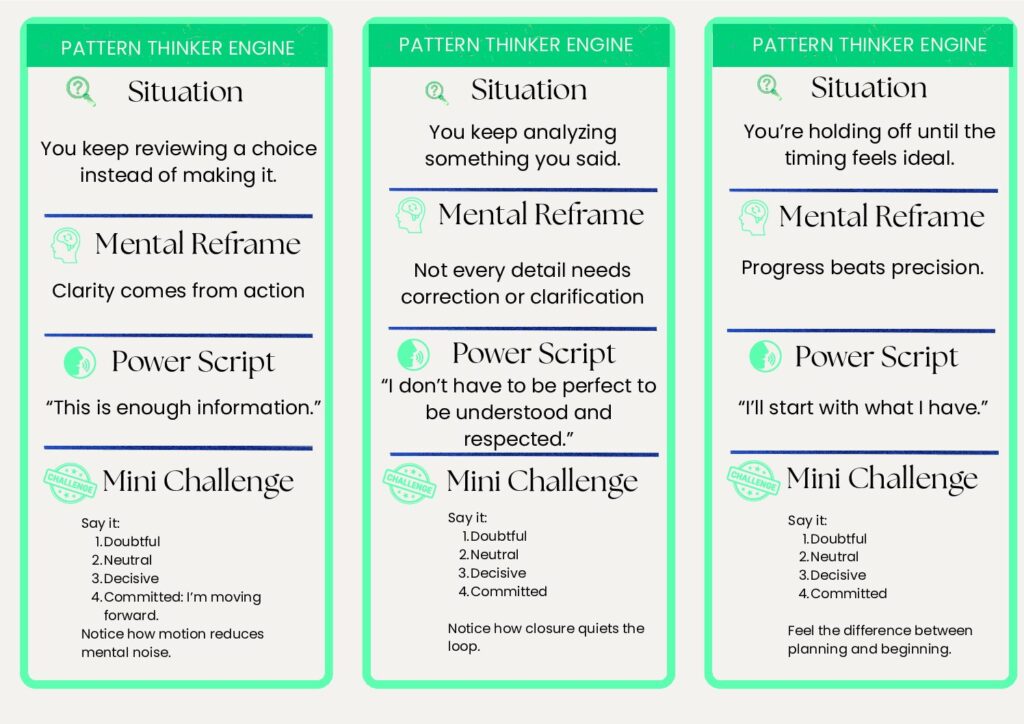
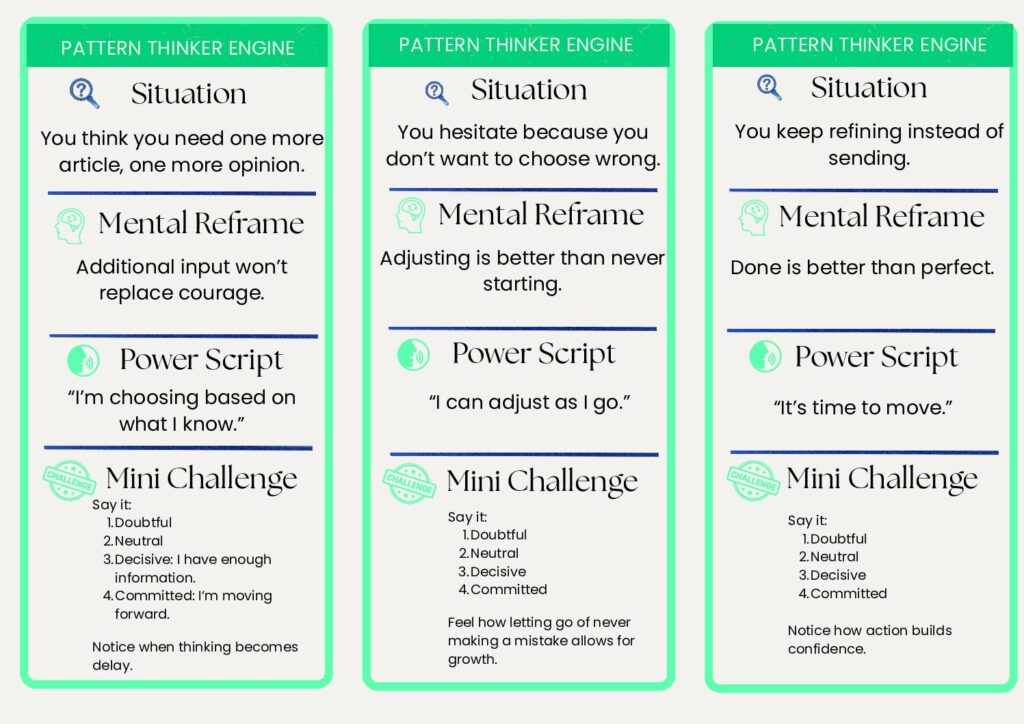
Pattern Thinker
For the overthinker who researches instead of deciding, refines instead of sending, and treats “one more opinion” as a stand-in for courage — these target the exact moment analysis turns into avoidance. The reframes are blunt on purpose: “additional input won’t replace courage,” “done is better than perfect.” The script is something to say to yourself mid-spiral, and the challenge moves you from doubtful to decisive, then committed.
Visionary Creator
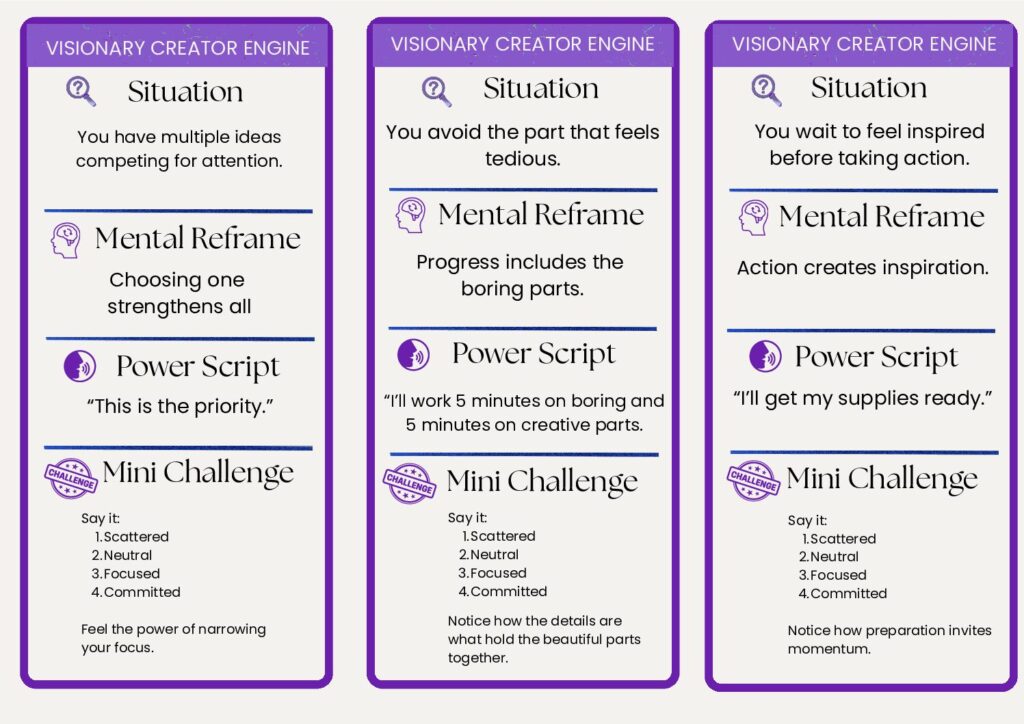
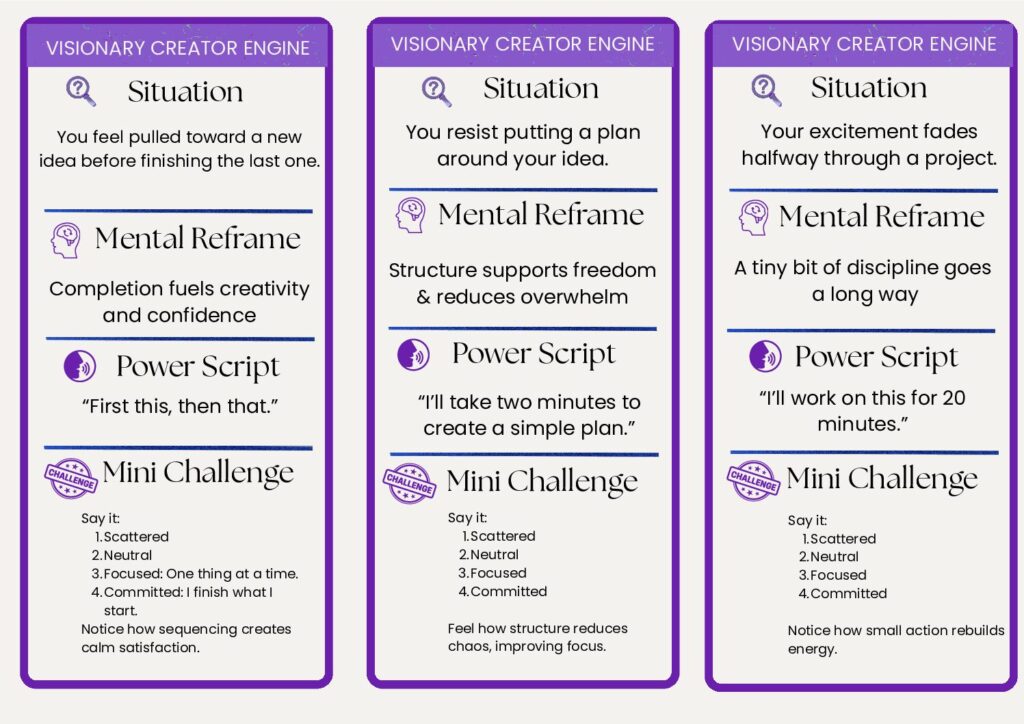
If you’ve got five ideas competing for attention, skip the part that feels tedious, or wait to feel inspired before you start, this set is built around you. It targets the specific friction points — a new idea pulling you off an unfinished one, resistance to making a simple plan, excitement fading halfway through a project — with reframes like “completion fuels creativity and confidence” and “structure supports freedom.” The challenge moves you from scattered to committed, one phrase at a time.
These work the same way the Boundary Language scripts do — short enough to actually use in the moment, not just read and nod at. If the pattern underneath any of this feels like it runs deeper than a single situation, the Self-Trust collection goes further into where that doubt comes from.