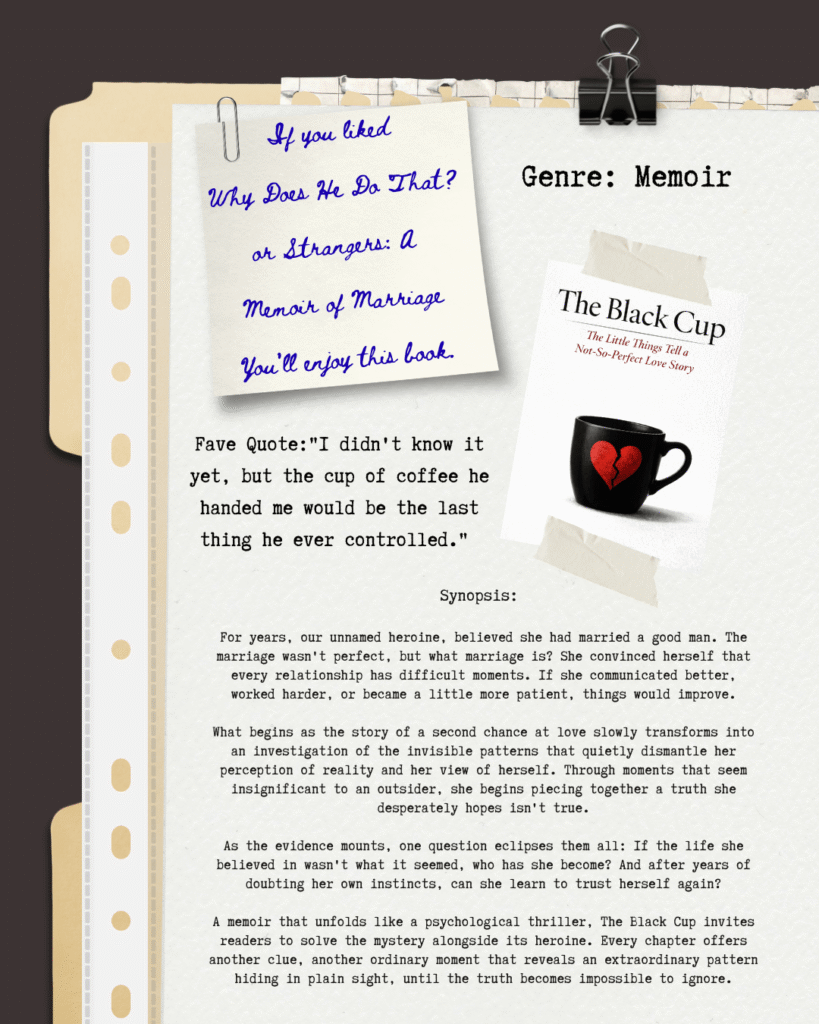
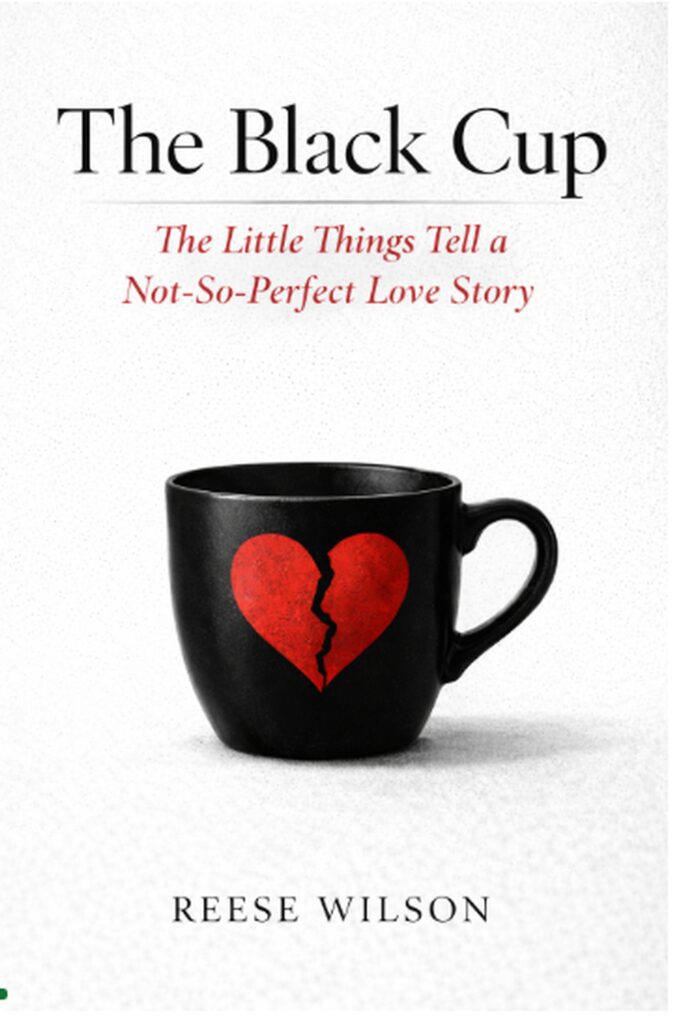
The Black Cup is a memoir, that reads like a psychological thriller. It’s the story of a woman who did everything right and still ended up standing in a life she didn’t recognize, wondering how she missed it. The Black Cup is witty, inspiring, unbelievable and sometimes downright uncomfortable.
Reese Wilson writes with surprising honesty about falling in love, missing the signs, and the quiet systematic dismantling of a woman. How does a sharp, funny, decisive woman, slowly become edited down to fit inside someone else’s mood?
And then — the part no one talks about. Her escape to freedom and all it costs her.
If you’ve ever laughed at your own life to keep from crying about it, ever wondered how someone smart ends up somewhere so small, ever needed proof it’s not too late to start over — The Black Cup is a book for you.
3 Key Takeaways
1. You can love someone deeply and still be harmed by them.
The book doesn’t ask the reader to stop loving the person who hurt them. It asks them to love themselves more. That distinction — loving him and leaving, understanding him and refusing to be destroyed by him — is one of the most compassionate and most honest things the book offers to anyone in a similar situation.
2. The little things are never just little things.
The wrong coffee cup. The mustard not spread. The shaved face on the off days. The mailbox lid slamming. These details are not trivial — they are the texture of control. The book teaches the reader to trust what their body already knows before their mind is ready to name it. That is a genuinely life-changing reframe for anyone who has been told they are too sensitive or too demanding.
3. Silence protects the wrong person.
The book’s most universal and most urgent message. Every person reading this who has packed their hurt into a little box, who has spread the mustard and said nothing, who has stood behind their child so the tears wouldn’t show — this book tells them that their silence is not keeping the peace. It is keeping the secret. And secrets belong to the person who needs them kept.