
I used to leave conversations replaying what I should have said. In the car. Folding laundry at eleven at night. Rehearsing a comeback for an argument that happened three days ago. If that sounds familiar, this page is for you.
These aren’t rules. They’re scripts — six real situations, and four ways to respond to each one, from gentle to unapologetic. Start with Level 1. Move up only when you’re ready. You don’t have to go straight to gangsta.
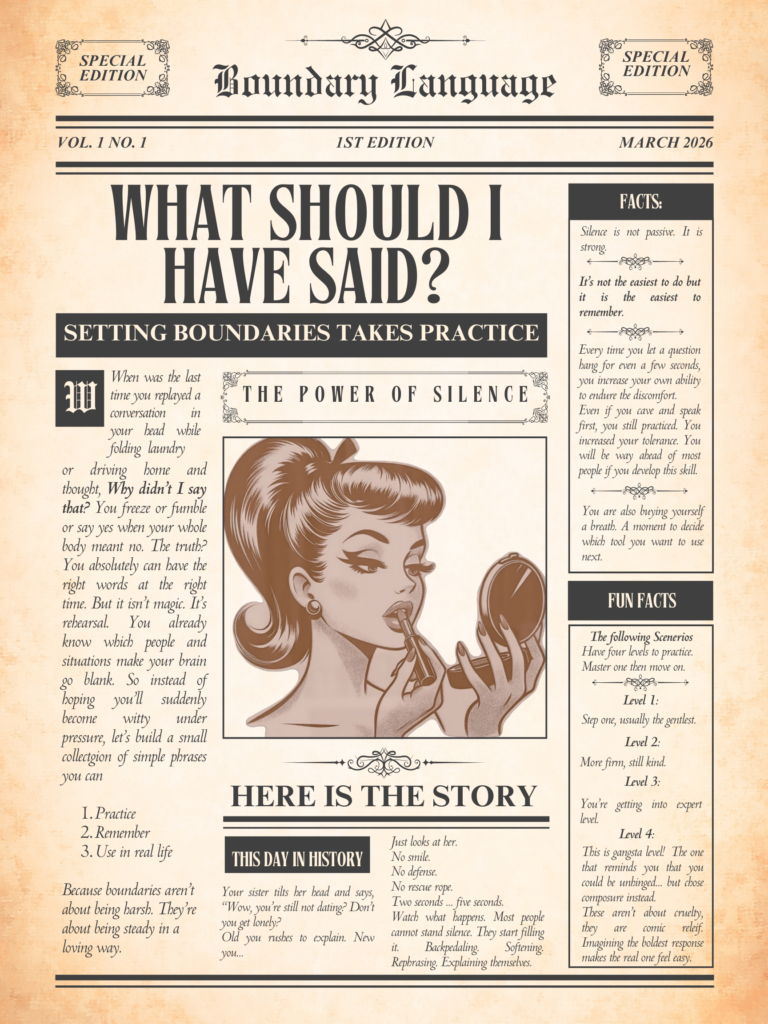
The Power of Silence
Boundaries aren’t about being harsh. They’re about being steady, in a loving way. That steadiness takes practice — most of us weren’t taught it. The six cards below walk through situations that come up again and again: an adult child asking for your weekend, a friend who keeps borrowing money, someone joking about your divorce at dinner. Each one has four levels, from the gentlest opening line to the one that’s, frankly, a little fun. Pick the level that fits the relationship and the day you’re having.
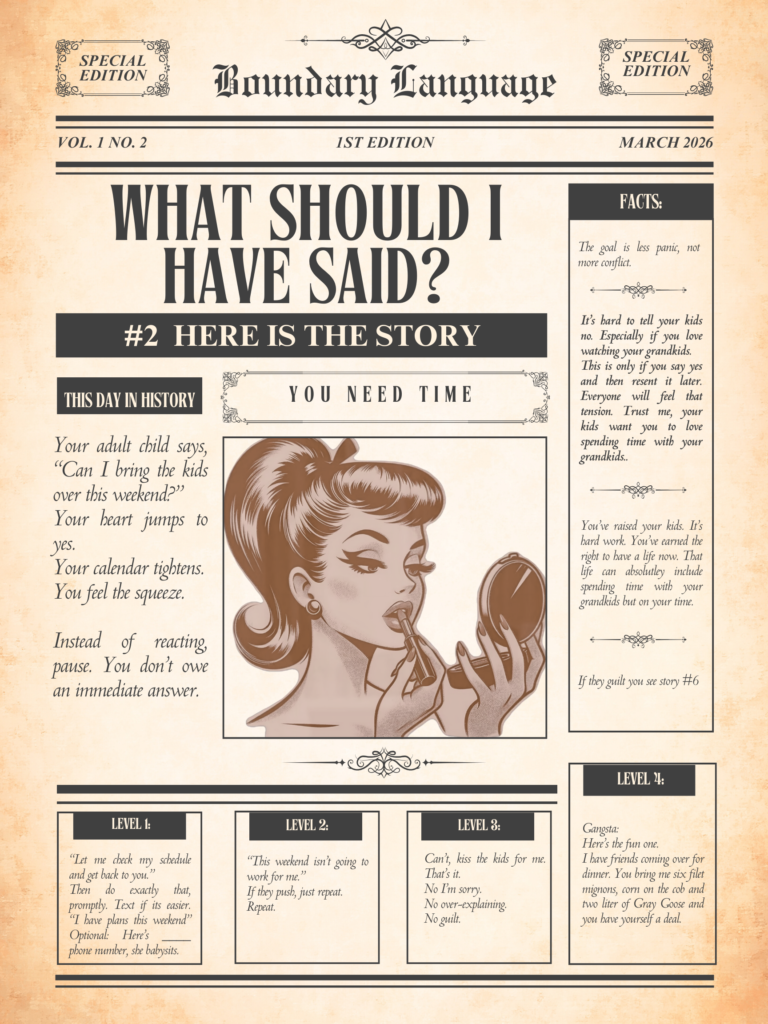
When You Need Time to Answer
Your adult child asks if they can bring the kids over this weekend, and your heart says yes before your calendar’s even checked. That’s the trap — the automatic yes. You don’t owe anyone an immediate answer, even people you love. “Let me check my schedule and get back to you” buys you the pause you need, and it costs you nothing.
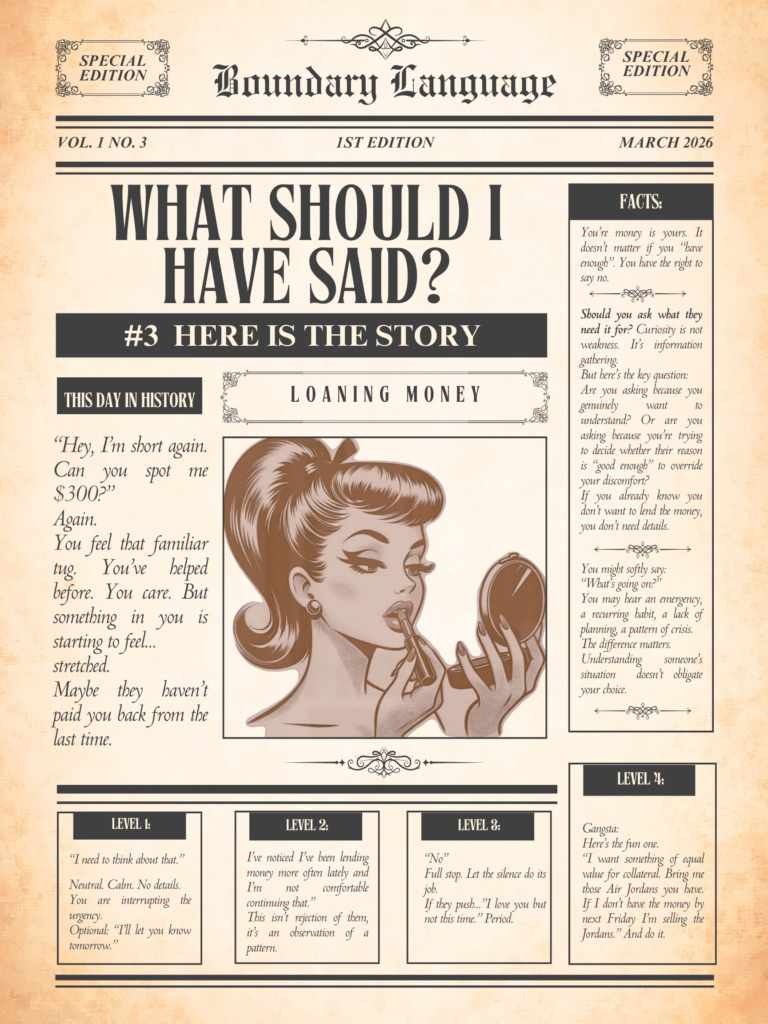
When Someone Asks to Borrow Money — Again
“Hey, I’m short again, can you spot me $300?” You’ve helped before. You care. But something in you is starting to feel stretched, and that feeling is information, not selfishness. You’re allowed to ask what’s going on, and you’re allowed to say no without an explanation attached to it.
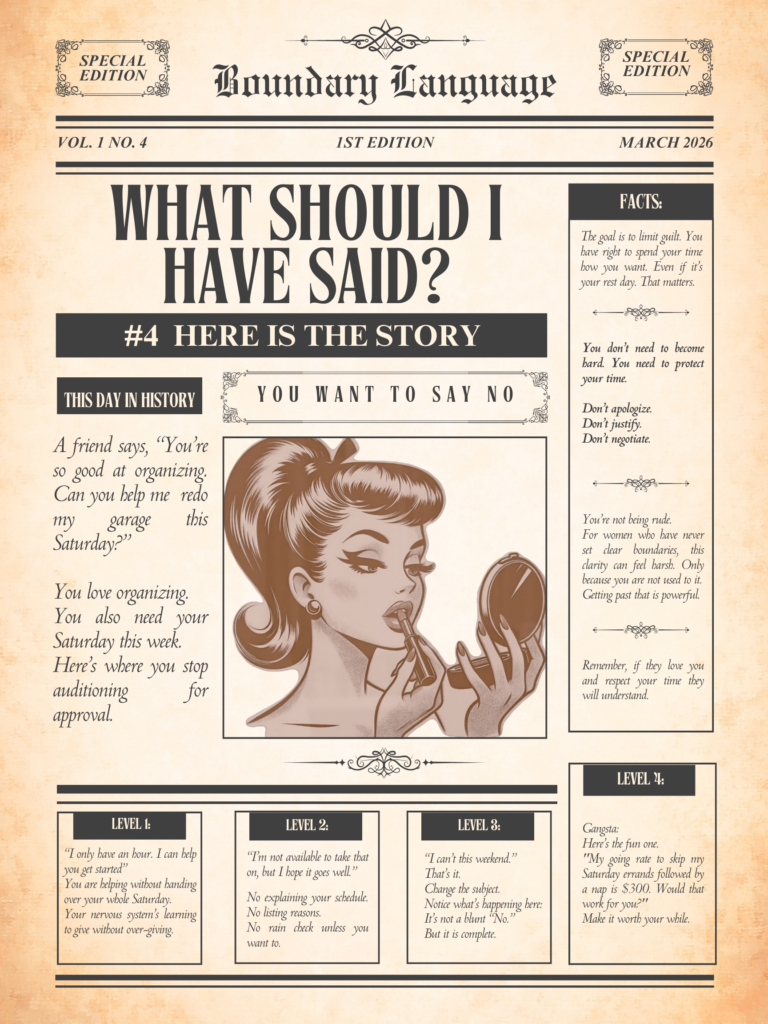
When You Just Want to Say No
A friend says you’re so good at organizing, could you help redo their garage this Saturday? You love organizing. You also need your Saturday. This is where you stop auditioning for approval — you don’t have to apologize, justify, or negotiate your way out of a simple no.
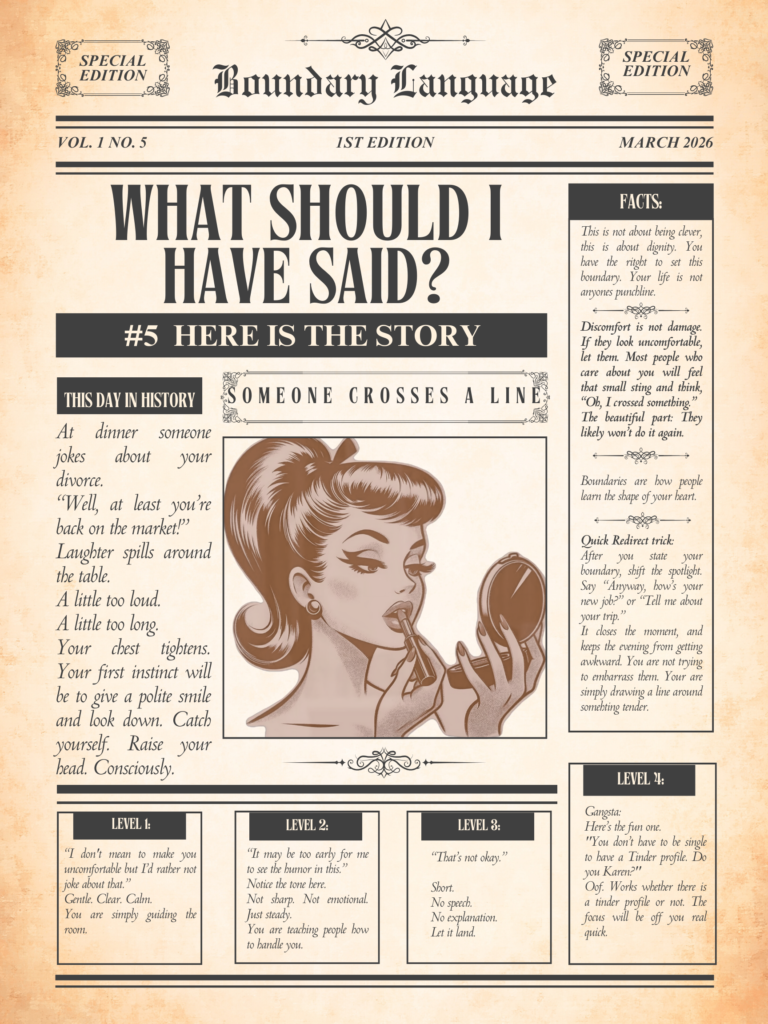
When Someone Crosses a Line
Someone jokes about your divorce at dinner — a little too loud, a little too long — and the table laughs. Your first instinct will be to smile and look down. Catch that instinct. Raise your head, consciously, and say something short. You’re not trying to embarrass anyone. You’re just drawing a line around something tender.
When You’re Being Guilt-Pulled
You say you can’t help this weekend. They sigh. “I guess I’ll just figure it out myself.” No yelling, no insults — just disappointment, wrapped in implication. Guilt is a hook. You don’t have to bite it. Feeling guilty isn’t proof that you did something wrong; it’s just evidence that you’re changing a pattern.
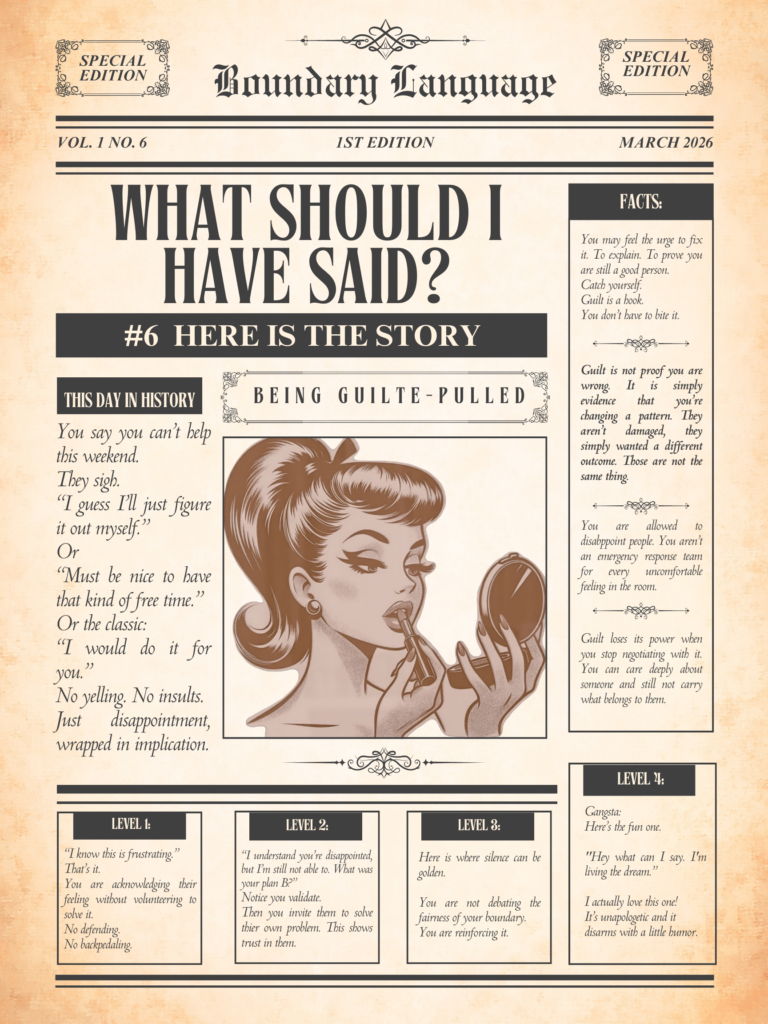
Guilt loses its power when you stop negotiating with it. You can care deeply about someone and still not carry what belongs to them.
If you want the longer version of any of this — what it actually feels like to unlearn people-pleasing in real time, not just the script for it — read I People-Pleased My Way Into an Entirely Different Country and Feeling Guilty Is Not The Same As Being Guilty.